Modern football has a strict and standardized set of rules applied worldwide. However, the rules have not always been the same as they are today. They have been continuously adjusted to keep pace with the development of the world’s most popular sport. From the earliest regulations on offside, disciplinary cards, and substitutions to VAR, many changes have directly affected how players compete and how referees officiate matches.
Learning about Important Changes in Football Rules helps fans better understand why certain situations on the pitch are handled differently today compared with the past. This is also useful knowledge when watching football online on 90PhutTV, especially during matches involving controversial decisions.
How Have the Offside Rules Changed?
Offside is one of the regulations with the most notable changes throughout football history. Some of the earliest football rules applied very strict regulations, under which a player could be considered offside if they were positioned in front of the ball when receiving it.
After many adjustments, the rule gradually became more flexible. Modern regulations focus on the player’s position relative to the ball and the last opposing player when the ball is passed. A player is only penalized when actively participating in the situation according to the criteria specified by the rules.
These changes have created more favorable conditions for attacking football to develop. Forwards have more space to move, while defensive lines are required to organize their formations more systematically. When watching 90Phut TV, fans can see offside situations being carefully checked by referees and assistant referees.
The Introduction of Yellow and Red Cards
Before the 1970 World Cup, football did not have the yellow and red card system used today. Referees mainly used verbal warnings or signals to caution players or send them off.
The 1970 World Cup in Mexico marked a turning point when the card system was introduced. The yellow card became the official form of caution, while the red card was used to send a player off.
This regulation helped referees communicate their decisions more clearly while also requiring players to control their behavior on the pitch. A player who receives two yellow cards in the same match will be sent off.
The card system also makes it easier for viewers to understand the development of a match. Those who follow football standings are often also interested in the number of cards and suspension status, because disciplinary sanctions can directly affect a team’s squad in the following round.
Substitution Rules Have Become More Flexible
Throughout football history, the right to make substitutions was once strictly limited. Teams were not always allowed to freely replace players while a match was in progress.
Over time, substitution rules have been adjusted to protect players’ health and provide more tactical options. From very limited numbers of substitutions, competitions today allow teams to make up to five substitutions in many circumstances, depending on the regulations of each competition.
The five-substitution rule was widely implemented after football was affected by the COVID-19 pandemic and has remained in place across many competitions. This is one of the Important Changes in Football Rules that has had a clear impact on tactics.
Having additional substitution opportunities allows coaches to proactively adjust their formations, reduce the workload on players, and give substitute players opportunities. 90 Phút TV regularly updates lineup changes in exciting matches.
Penalty Rules Have Been Refined
Penalty kicks are one of the situations with the greatest impact on match results. Over time, regulations concerning penalties have continuously been clarified to reduce controversy.
Goalkeepers must comply with certain requirements when an opponent takes a penalty. Under modern regulations, the goalkeeper must have at least part of one foot touching or in line with the goal line when the kick is taken.
In addition, the player taking the penalty must follow the standard preparation procedure and must not perform actions that illegally deceive the goalkeeper. Detailed regulations give referees a clearer basis for handling sensitive situations.
Penalty kicks often have a major impact on football standings, especially in matches where the points gap is extremely close.
VAR Technology Creates a Major Turning Point
One of the most prominent changes in modern football is the emergence of VAR. This technology was widely tested during the 2010s before being officially adopted by FIFA and many major competitions.
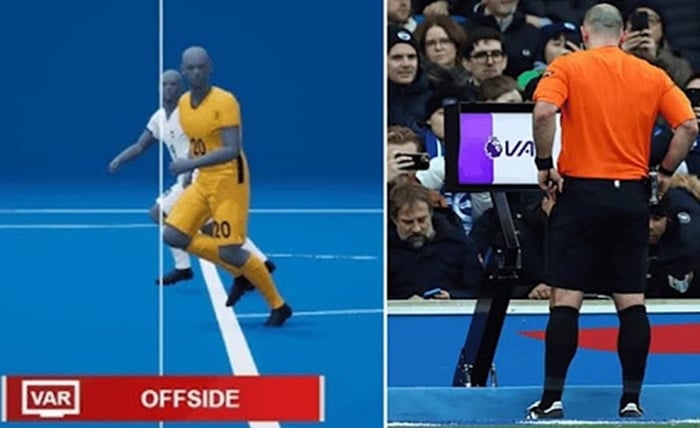
VAR assists referees in reviewing certain important situations, such as goals, penalties, direct red cards, and player identification in relevant incidents. The referee remains the person who makes the final decision.
The introduction of VAR has helped reduce some serious errors, but it has also created considerable debate over review times and the interpretation of the rules.
When watching 90m TV, viewers may witness moments when referees stop the match to review VAR. This technology has become a familiar part of elite football.
The referee uses the VAR monitor to review an important situation before making the final decision
The Handball Rule Has Been Clarified
Handball situations have always caused controversy because the distance, speed, and position of the arm can vary. Therefore, football rules have been adjusted and clarified several times.
Not every handball situation results in a foul. Referees need to consider the position of the arm, the player’s movement, the distance from the ball, and whether the player deliberately used their hand to play the ball.
In particular, when the ball touches an attacking player’s hand and directly leads to a goal in certain situations, the rules contain specific provisions. This helps prevent a goal from being awarded after a player deliberately or accidentally gains an advantage using their hand.
Viewers of 90P TV often encounter these situations in high-tempo matches when the ball is constantly being played inside the penalty area.
Goalkeeper Rules and Ball Possession Time
The rules applying to goalkeepers have also changed over time. One notable current regulation concerns the amount of time a goalkeeper is allowed to hold the ball with their hands.
Under the new rule, a goalkeeper is not allowed to hold the ball with their hands for more than eight seconds. If they violate this rule, the opposing team is awarded a corner kick instead of an indirect free kick as under the previous regulation.
This change aims to limit time-wasting and encourage a faster pace of play. It is a clear example of how football rules are continuously updated to make matches more exciting and fairer.
Information about rule changes is also useful for those following 90Phut TV, because understanding the rules helps viewers analyze refereeing decisions more easily.
The new rule on how long goalkeepers can hold the ball aims to limit time-wasting and encourage a faster pace of play
Goal-Kick Rules and Playing Out From the Back
Goal-kick rules have also undergone notable changes. Previously, players receiving the ball from a goalkeeper’s goal kick generally had to remain outside the penalty area or wait for the ball to leave the area.
Modern regulations allow players to receive the ball inside the penalty area after the ball is kicked and put into play. This creates more options for building up play from the back.
Teams that favor possession-based football take advantage of this regulation to stretch the opponent’s pressing structure. Goalkeepers can make short passes to center-backs or defenders instead of always having to send the ball long.
Changes to goal-kick rules have contributed to the development of build-up play. Fans following 90 Phut can easily notice that many teams today proactively build from the back instead of relying on long passes.
Rules Are Continuously Adjusted to Reflect Reality
Football is a sport that develops very rapidly. Tactical approaches change, technology advances, and the demand for greater player protection continues to increase, meaning that the rules cannot remain static.
From offside, substitutions, and penalties to VAR, many regulations have been adjusted to ensure fairness and improve the quality of matches. This is why Important Changes in Football Rules continue to be a topic of interest among fans.
Keeping the rules updated also helps players, coaches, and referees clearly understand their responsibilities. For viewers, knowledge of the rules allows them to assess situations on the pitch more objectively.
In addition, platforms such as 90Phut provide a wide range of football-related content, helping fans easily follow developments from the world’s leading competitions.
How Do Rule Changes Affect Tactics?
Every rule adjustment can have a certain impact on tactics. Expanded substitution rules give coaches more rotation options. VAR requires players to be more cautious about fouls inside the penalty area. Changes to goal-kick rules encourage the trend of building possession from the back.
Meanwhile, more accurate interpretations of the offside rule create opportunities for teams to develop diverse attacking strategies. Defensive lines must also proactively adjust the distance between different lines.
These changes can directly affect a team’s performance. Even a small change in the rules can sometimes make a difference in the race for bảng xếp hạng bóng đá, especially in competitions where the points gap is very small.
Conclusion
Important Changes in Football Rules reflect the continuous development of the world’s most popular sport. From offside, disciplinary cards, and substitutions to penalties, handball, and VAR, every adjustment aims to improve fairness, safety, and entertainment.
Through platforms such as 90Phut TV, viewers can continue watching exciting matches and stay updated with the latest information about football rules as well as football standings.